
6 Photography Tips for Beginners — SMI Digital
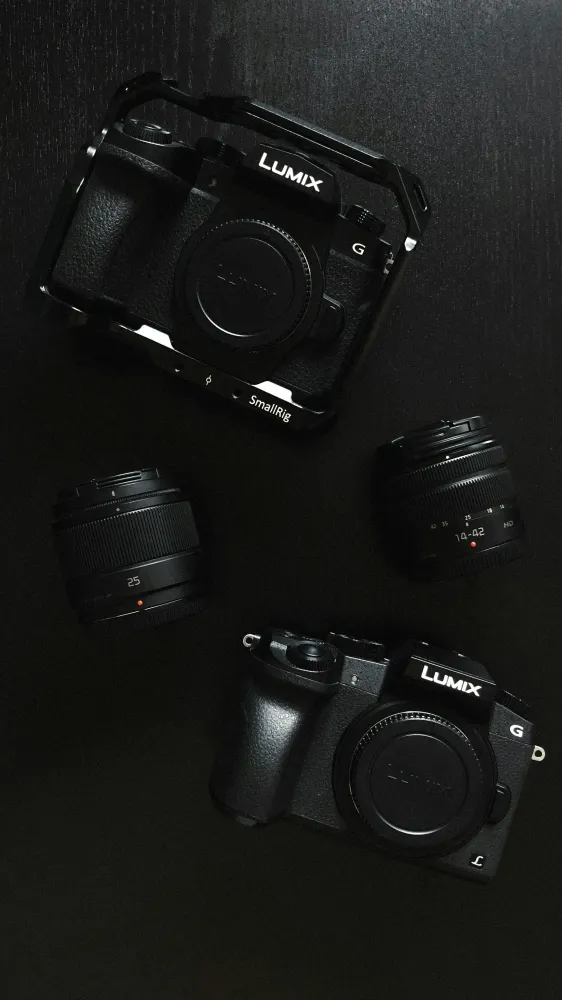
Photograph smart, not expensive
Many believe that you need expensive equipment to take good photos. High-quality equipment can help, but it's far less important than most beginners think.
Good photography is about light, timing, and your eye – not your bank account. If you're a beginner looking for your first real camera, here are 6 tips I would follow:
1. Buy used or refurbished
Find a camera model that has just been discontinued and buy it used or refurbished. That's where you'll find the best deals.
Recommended models:
- Panasonic Lumix S5
- Sony A7 III
- Sony a6700
- Panasonic GH6
These cameras offer professional image quality and features – often for under €1,000. They're not perfect, but you don't need to be Christopher Nolan in your first year.
2. Think in systems
Before you buy, think about which camera system (mount) you want to invest in – because the lenses will tie you down in the long run.
Nikon Z or Canon RF: Top quality, but expensive and less choice from third-party manufacturers.
Sony (E-Mount) and Lumix (L-Mount): Large selection of affordable lenses from third-party manufacturers (e.g. Sigma, Tamron) – more flexibility for your budget.
3. Sensor size
A full-frame sensor is not essential, but it offers advantages like stronger bokeh and better isolation (ideal for portraits). However, the system and lenses are usually heavier and more expensive.
Tip: For landscapes or cars, APS-C is often sufficient. If you want to get into full-frame on a budget, consider the Lumix S5.
4. Don't worry about the brand
Whether it's Canon, Sony, Lumix, or Fujifilm – almost every camera from 2016 onwards delivers excellent results. What's more important is: How does it feel in your hand? Do you feel comfortable with the controls?
5. Try before you buy
Rent a camera or test it in a store:
- Try out the menus.
- Change lenses.
- Check the intuitive controls.
The best camera is the one you use regularly and enjoy.
6. Image editing
Most photos benefit from editing. An unedited RAW file is rarely spectacular.
Don't buy presets: Without knowledge, even expensive filters won't help.
Software: For professional results, there's no way around an Adobe subscription (Lightroom/Photoshop).
Tip: Students often get significant discounts on Adobe Creative Cloud subscriptions.
Recommendations: Your starter kit
The checklist
When buying, pay attention to:
- At least 18 MP (resolution is more important than megapixel count on phones).
- Sensor size: At least Micro Four Thirds or APS-C.
- Interchangeable lens system (flexibility is everything).
- RAW function (essential for post-processing).
Concrete set suggestions
Option A: Sony a6700 (APS-C)
- All-purpose: 17-70mm f/2.8
- Wide-angle: 10-18mm f/2.8
Option B: Lumix S5 (Full-frame)
- All-purpose: 28-70mm f/2.8
- Prime lenses (for sharpness and low light):
Note: As a beginner, you usually don't need other focal lengths (tele) – they're expensive and specialized for sports or wildlife photography.
Conclusion: Avoid G.A.S.
G.A.S. (Gear Acquisition Syndrome) is the urge to constantly buy new gear. Don't be tempted. Just start, take photos regularly, and develop your eye. The best equipment is the one you can operate blindfolded.